The Training Pyramid: How You Earn a Sub-3 Marathon
Every zone in your training has a job. The reason most runners stall out is not effort, it is that they never built the layer underneath the one they are trying to race on.
In endurance training, simplicity is what makes consistency possible. The model I coach from is a pyramid. Every zone in it has a specific job, and the interaction between those zones is what unlocks your actual potential.
The reason most runners stall out is not effort. It is that they keep trying to race on a layer they never built.
Prefer the whole system in one place? The PR Pyramid has the paces, the workouts, and the strength work, 5K through marathon.
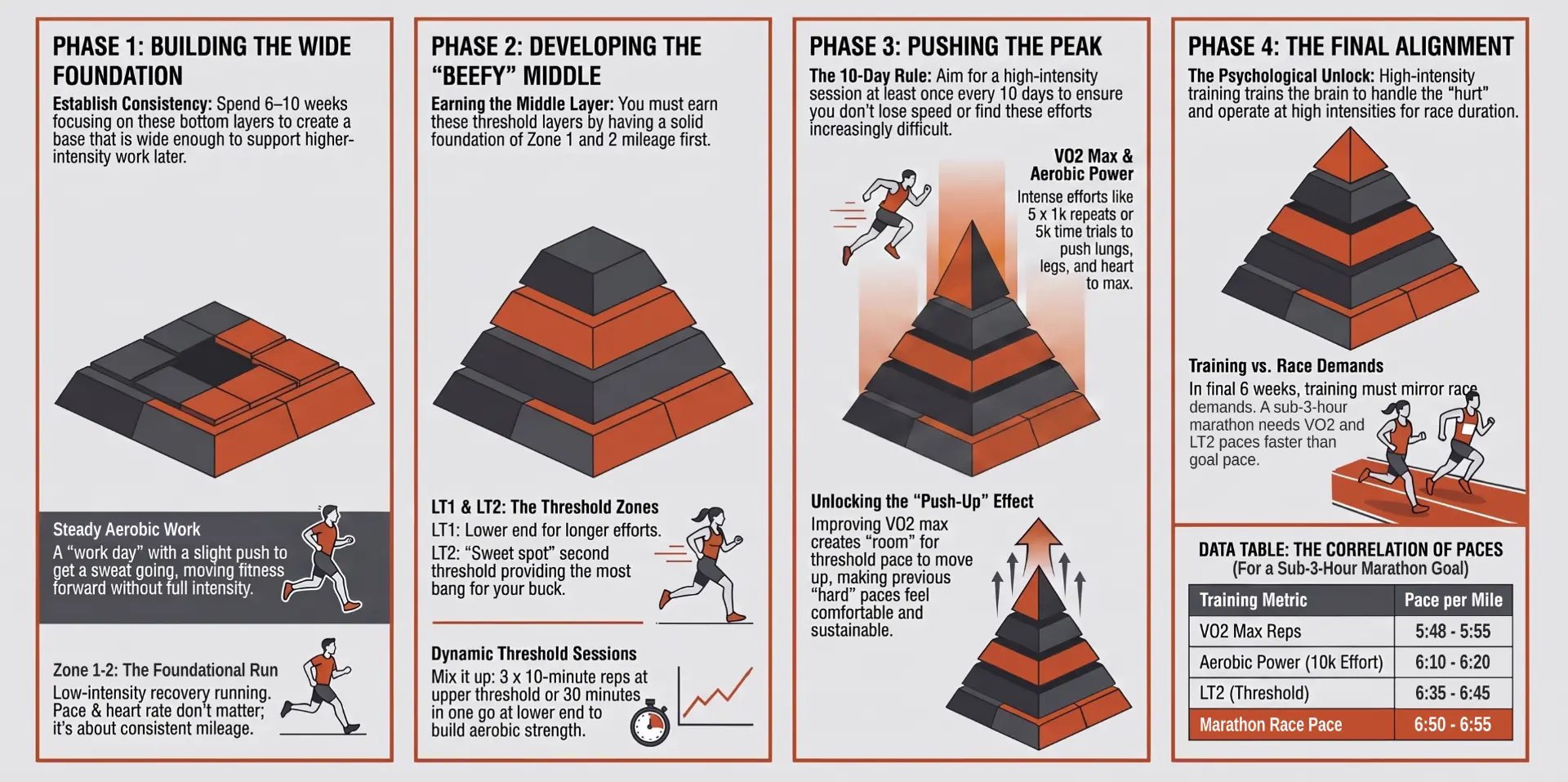
1. The Foundation: Building the Base
A stable pyramid needs a wide, strong base. Mine has two distinct kinds of running in it.
Zone 1-2, the foundational run. Pace and heart rate do not matter here. The job is recovery and simply spending time running. This is how you accumulate a base without digging a hole.
Steady aerobic, the working base. A step up from a recovery jog. This is the day you decide to work a bit and push a little to move your fitness floor forward. Roughly 30 seconds per kilometer slower than threshold pace.
Spend six to ten weeks living in these two before you start reaching for anything above them.
2. The "Beefy" Middle: LT1 and LT2
The middle of the pyramid is threshold work, and it splits into two markers worth knowing by name.
LT1, the bottom end of threshold, is what you can sustain for long stretches.
LT2 is the sweet spot, a pace you can hold for roughly 50 to 70 minutes. This is the best return on investment in the entire pyramid.
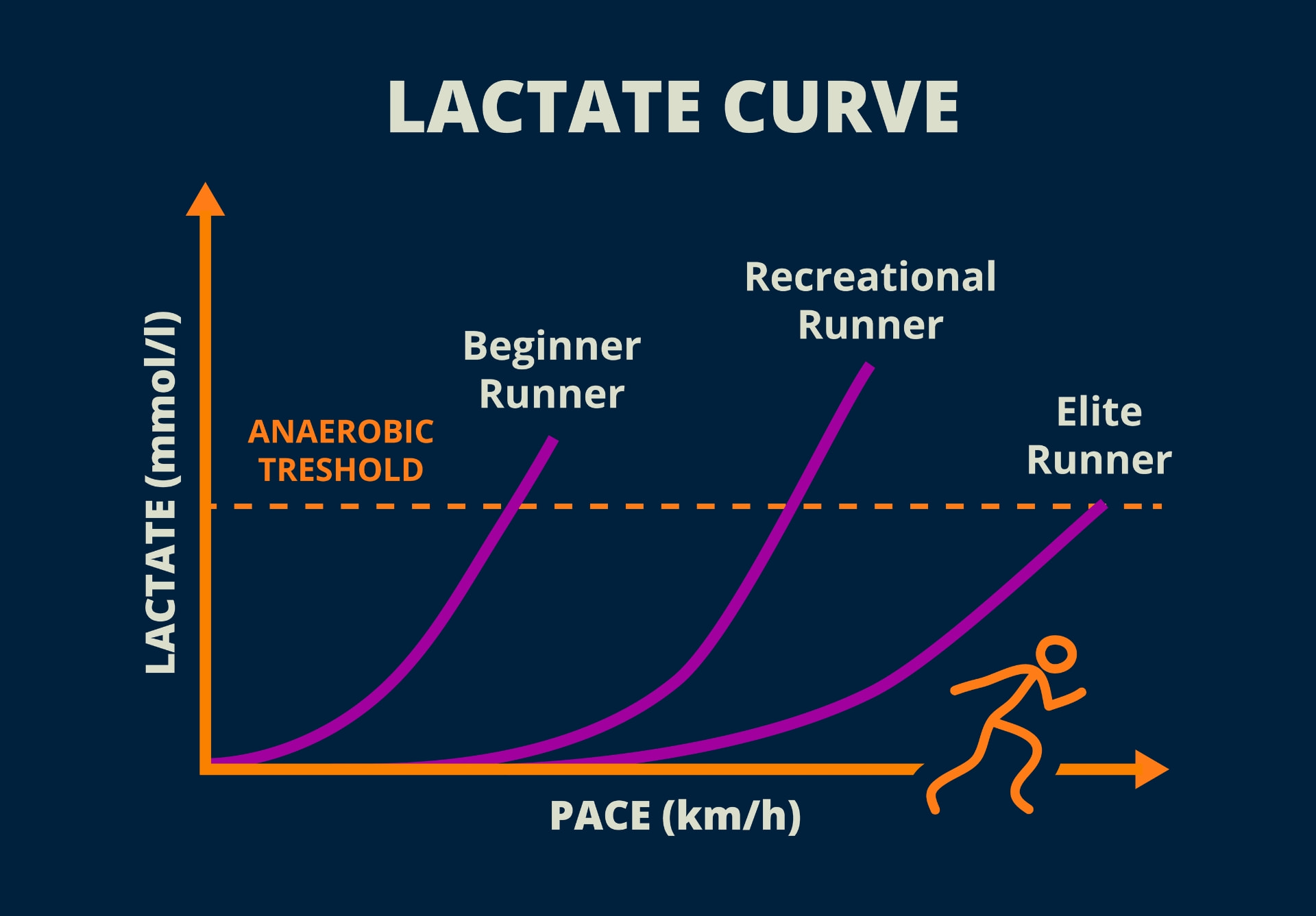
Building a middle layer that is genuinely beefy and fat is not optional. It is what gives you physiological permission to handle the sharp stuff at the top. Mix it up: 3 x 10 minutes at upper threshold, or 30 minutes continuous at the lower end.
3. The Peak: VO2 Max and Aerobic Power
At the very top sits work above threshold. Kilometer repeats, 5k time trials, short high-intensity intervals like 15 x 1 minute. This is where you push lungs, legs, and heart to the ceiling.
One rule I hold runners to: touch a high-intensity session at least once every 10 days. Go longer than that and you do not just lose speed, you lose your tolerance for the feeling, and those sessions start to feel disproportionately awful.
The "Push-Up" Effect
Here is the part that changes how people train.
When you train the peak of your pyramid, it does not only make you faster over short distances. It creates room underneath. Improving VO2 max lets your threshold pace move up into space that did not exist before, which means the paces that used to feel hard start to feel sustainable.
You are not just adding a top layer. You are pushing the whole structure up.
The Sub-3-Hour Marathon Blueprint
A sub-3 marathon averages about 6:52 per mile. Here is how the layers have to stack for that to be realistic.
| Training Metric | Pace per Mile |
|---|---|
| VO2 Max Reps | 5:48 - 5:55 |
| Aerobic Power (10k effort) | 6:10 - 6:20 |
| LT2 (Threshold) | 6:35 - 6:45 |
| Marathon Race Pace | 6:50 - 6:55 |
Read it from the top down. If your 1k repeats are landing at 5:48 to 5:55, your LT2 has room to settle into 6:35 to 6:45. With threshold there, marathon effort can realistically slot into 6:50 to 6:55. The layers hold each other up.
Now flip it. If your VO2 max repetitions are only at 6:50 per mile, it is physiologically impossible to hold that same pace for 26.2 miles. There is no gap between your maximum capacity and your race effort, and a marathon is won in that gap.
Stop Guessing: Where PNOĒ Comes In
Every number in that table falls apart if it is a guess. Most runners set their zones off a formula, 220 minus your age or a percentage of some old race result. Those are population averages. You are not a population.
In my office we measure it. You run on the treadmill in a PNOĒ metabolic mask while we analyze your breath, breath by breath, as the effort ramps up. That gives us your true VO2 max, and more useful week to week, it gives us LT1 and LT2 as actual numbers instead of estimates.
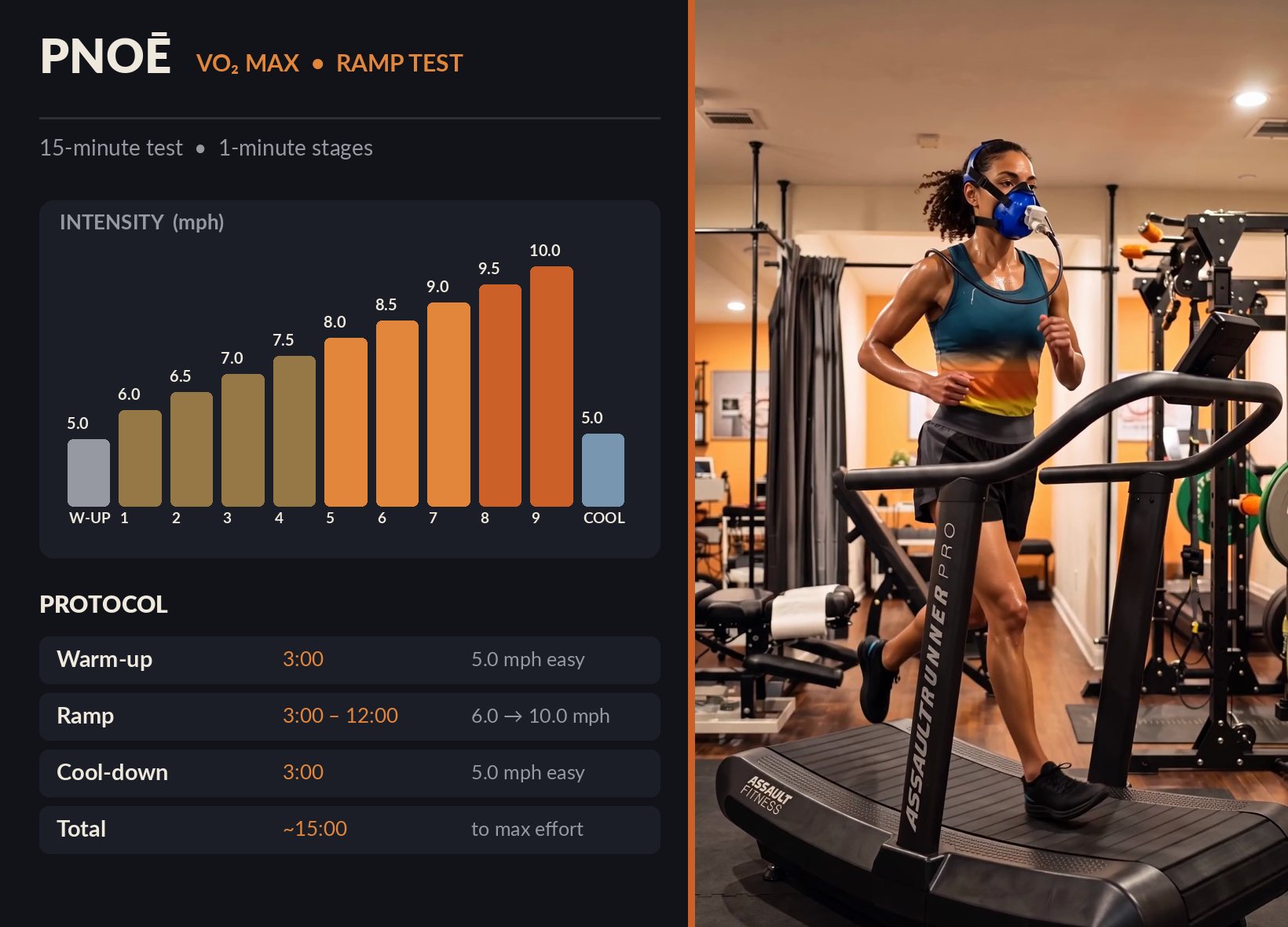
From there the zones are yours. We know where your easy running has to sit to stay easy, where threshold work has to land to thicken the middle of the pyramid, and how hard the top has to be to push the whole structure up. Then we retest and watch the layers move.
That is the difference between training by feel and training on data. If you want to see the testing itself, it lives here: PNOĒ metabolic and VO2 max testing.
The Lesson
There is always a correlation between these systems. You do not choose your marathon pace, you earn the right to it by building the layer above it first.
In the final six weeks, training has to mirror race demands. Before that, it has to build the thing that makes those demands survivable.
One caveat worth saying out loud. This pyramid is the aerobic side of the equation. It tells you what your engine can sustain, not what your legs can absorb, and in a hilly race those are different limiters. If your sessions are ending because your quads are cooked rather than because you are out of breath, the fix is structural rather than aerobic, and I laid that out in mountain ultra leg strength.
If you want your own numbers instead of a formula's best guess, that is what a testing session is for. Book your evaluation and we will map your pyramid, then build up from whichever layer is thin.
Want the whole thing as a downloadable system? The PR Pyramid lays out the paces, the workouts, and the strength that earn the PR, 5K through marathon. $14.99.