Shin Splints vs Stress Fracture: Can EMTT and Shockwave Therapy Help Runners Recover Faster?
How to tell medial tibial stress syndrome from a tibial stress fracture, and where focused shockwave, radial pressure wave, and EMTT fit into modern runner rehab.

Few injuries frustrate runners more than persistent shin pain. Whether you're training for a marathon, returning from injury, or building mileage, pain along the tibia can quickly derail your goals.
The challenge is figuring out whether you're dealing with Medial Tibial Stress Syndrome (MTSS), commonly called shin splints, or a more serious tibial stress fracture. Both injuries live on the same bone-stress continuum, but treatment, timelines, and risk profiles look very different.
Recent advances in regenerative sports medicine have added new tools to the rehab toolbox: Focused Extracorporeal Shockwave Therapy (fESWT), Radial Pressure Wave Therapy (rESWT), and Extracorporeal Magnetotransduction Therapy (EMTT). Integrated platforms from companies such as STORZ Medical have made these technologies increasingly common across orthopedics, sports medicine, and physiotherapy clinics worldwide.
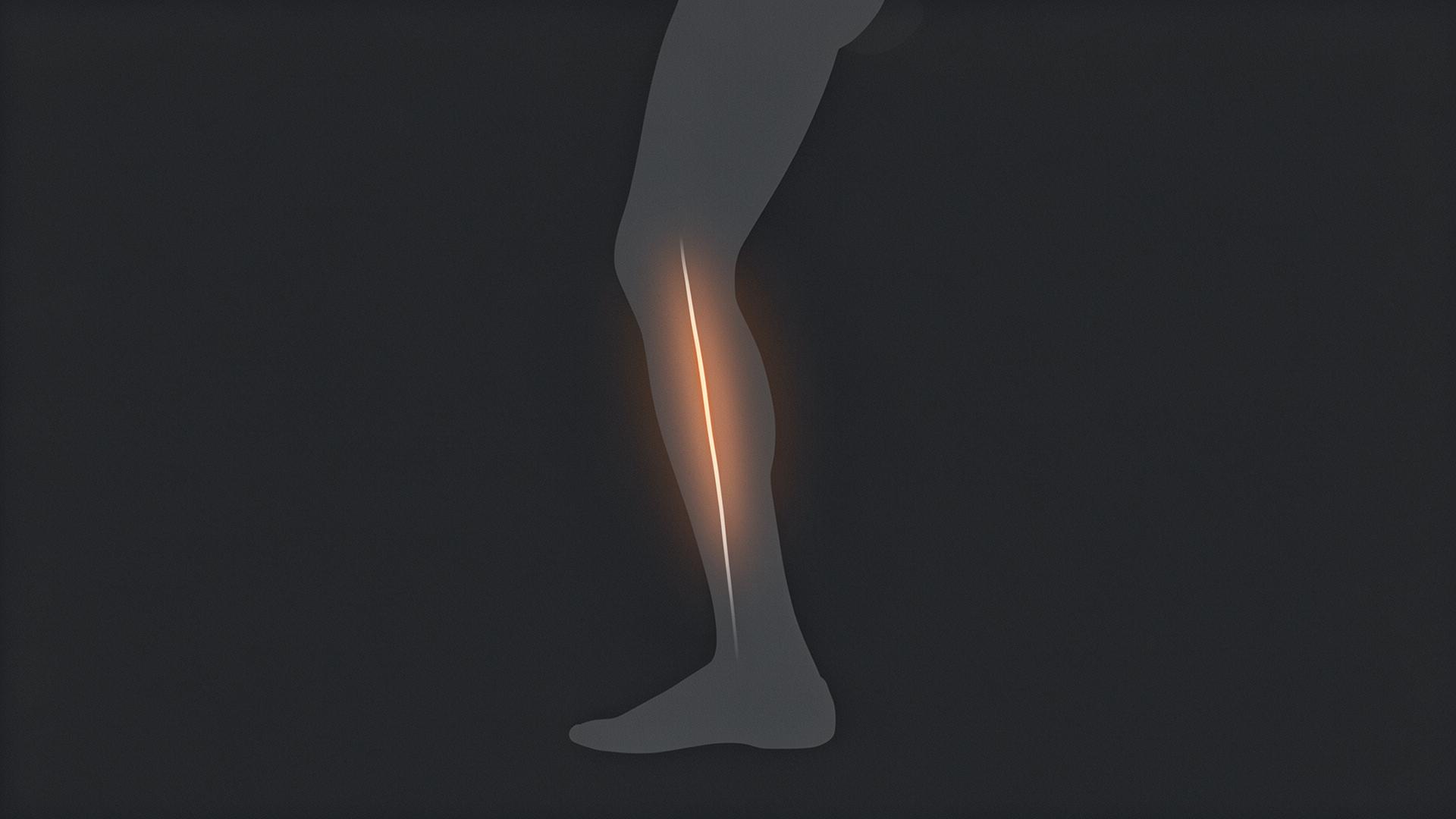
Understanding Medial Tibial Stress Syndrome (MTSS)
MTSS is one of the most common overuse injuries among runners. It develops when repetitive loading exceeds the body's ability to adapt, irritating the tissues along the inner border of the tibia.
Common causes
- Sudden mileage increases
- Excessive hill training
- Aggressive speed-work progression
- Returning to running too quickly after time off
- Poor recovery, sleep, or nutrition
- Lower-leg weakness and limited tissue capacity
Typical symptoms
- Diffuse pain along the inner shin
- Tenderness spread across a broad area
- Pain that often improves after warming up
- Post-run soreness
- Symptoms that fluctuate with training load
Most runners with MTSS can identify a painful region several centimeters long rather than one precise point.
What Is a Tibial Stress Fracture?
A tibial stress fracture occurs when repetitive mechanical loading causes microscopic damage to accumulate faster than the bone can repair itself. Unlike MTSS, the injury is inside the bone.
Common symptoms
- Localized, pinpoint pain
- Pain that worsens during activity
- Pain while walking
- Night pain
- Sharp pain during hopping
- Persistent symptoms despite rest
Athletes can usually point to a very specific spot with one finger.
MTSS vs Stress Fracture: Key Differences
| Feature | MTSS | Stress Fracture |
|---|---|---|
| Pain area | Diffuse | Localized |
| Warm-up effect | Often improves | Usually worsens |
| Walking pain | Rare | Common |
| Hopping test | Mild discomfort | Sharp pain |
| Night pain | Uncommon | More common |
| Running tolerance | Often possible with modification | Frequently requires cessation |
Do You Need to Stop Running?
The answer depends on the diagnosis.
When running may continue (mild MTSS)
- Pain stays below 3/10
- Symptoms don't worsen during the run
- Pain returns to baseline within 24 hours
- Walking is pain-free
When running should stop (suspected stress fracture)
- Walking hurts
- Hopping reproduces sharp pain
- Symptoms worsen week to week
- Pain occurs at rest
Bone injuries require protection before progression.
The Modern Rehab Model: Adapt, Don't Just Rest
Today's sports medicine focuses on load management rather than complete inactivity. The goals are to:
- Reduce excessive mechanical stress
- Promote tissue healing
- Build tissue capacity
- Restore running gradually
This is where advanced regenerative technologies may complement traditional rehab.
Focused Shockwave Therapy for MTSS and Bone Stress Injuries
Focused shockwave therapy delivers high-energy acoustic waves into a precisely targeted tissue depth. Unlike radial pressure waves, focused shockwaves concentrate energy at a specific point inside the body, which makes them well suited to deeper structures.
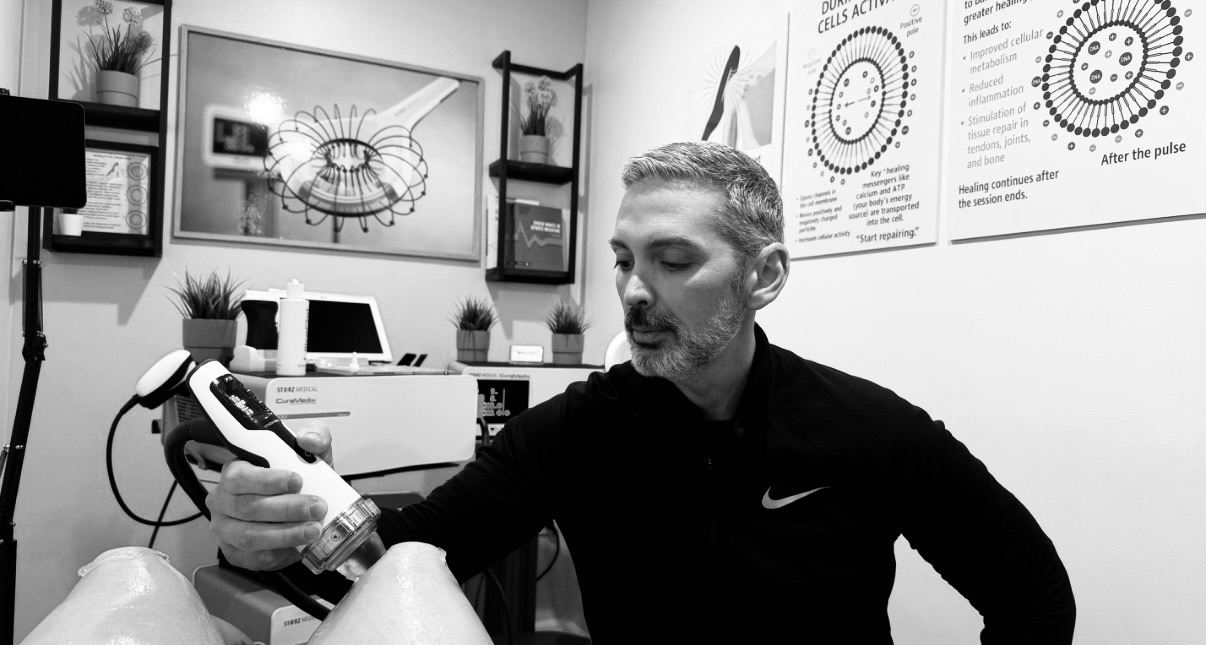
One of the most cited studies on MTSS found that runners who received shockwave therapy alongside a graded running program returned to activity faster than athletes completing rehabilitation alone. Research has shown improvements in pain, running tolerance, recovery timelines, and overall function.
Focused shockwave is often preferred when treating:
- Bone stress injuries
- Deep trigger points
- Tendon insertions
- Chronic, focal pain regions
Radial Pressure Wave Therapy for Shin Splints
Radial shockwave (radial pressure wave therapy) disperses mechanical energy over a wider, more superficial area. It is commonly used for musculoskeletal conditions with diffuse symptoms.
Radial therapy may be useful when:
- Pain is diffuse along the shin
- Calf and posterior chain tightness contribute
- A larger treatment field is needed
For many runners with MTSS, radial therapy serves as a bridge between pain reduction and progressive loading.
EMTT: The New Frontier in Musculoskeletal Regeneration
Extracorporeal Magnetotransduction Therapy (EMTT) uses high-energy oscillating magnetic fields, in the 100 to 300 kHz range, to stimulate biological processes involved in healing and recovery. That frequency range is what differentiates EMTT from traditional PEMF systems, which operate at much lower frequencies.
EMTT delivers:
- Higher oscillation frequencies than PEMF
- Greater magnetic field dynamics
- Short, non-invasive treatment sessions
- Deep tissue penetration
Clinicians increasingly use EMTT for bone stress injuries, delayed healing, tendinopathy, and return-to-sport programs.
The Combined Approach: EMTT + Shockwave
Many sports medicine providers now combine:
- Focused shockwave
- Radial pressure wave
- EMTT
- Progressive loading
- Strength training
The rationale: shockwave therapy may stimulate biological repair mechanisms while EMTT supports regenerative processes and tissue recovery. This integrated approach is increasingly common in elite sport environments.
Treating Shin Pain With the ADAPT Method
In my practice, shockwave and EMTT are tools, not the plan. The plan is the ADAPT Method, and it gives shin-pain rehab a clear structure from first visit to first race back.
A: Assess. Differentiate MTSS from a bone stress injury. Audit training load, mileage jumps, terrain, footwear, calf and hip strength, sleep, and fueling. We are looking for the real limiter, not just the painful spot.
D: Decrease Pain. Modify load to keep symptoms below threshold. Where appropriate, use focused shockwave, radial pressure wave, EMTT, manual therapy, and early isometrics to calm irritated tissue and restore tolerance.
A: Activate. Restore foot, ankle, hip, and trunk control. Reintroduce usable range and low-level loading so the shin is not the only structure absorbing impact.
P: Progress. Build calf, tibialis, and single-leg strength. Layer in plyometrics and a graded return-to-run progression that respects current capacity rather than the calendar.
T: Transfer. Rebuild mileage, hills, speed, and terrain back into your actual training. The goal is not pain-free rehab exercises. It is trusting the leg under the demands of your sport.
Shockwave and EMTT make several of these phases move faster. They do not skip any of them.
Strength Training Still Matters
Technology should complement the fundamentals, never replace them. Essential exercises include:
- Bent-knee calf raises
- Straight-leg calf raises
- Tibialis raises
- Step-ups
- Split squats
- Single-leg balance drills
The strongest evidence for long-term success still centers on progressive loading.
For how I sequence and dose that loading across a full training block, including where plyometrics fit and when to pull them before a race, see mountain ultra leg strength.
Frequently Asked Questions
Can shockwave therapy heal a stress fracture? Shockwave may support healing and reduce symptoms, but it does not replace proper diagnosis, load management, and medical oversight.
Is EMTT FDA-approved for stress fractures? Regulatory approvals vary by country and indication. Clinicians follow local regulations and evidence-based protocols.
What's the difference between focused and radial shockwave? Focused shockwave targets deeper tissues with precision; radial therapy disperses energy across a broader, more superficial field.
Can I run while receiving shockwave therapy? Many athletes continue modified running with MTSS, but suspected stress fractures typically require a pause from impact loading.
How many treatments are typically needed? Protocols vary based on injury severity, clinical findings, and practitioner preference, usually a short series spaced over several weeks.
Can EMTT and shockwave be used together? Yes. Combined protocols are increasingly used in orthopedic and sports medicine settings.
Conclusion
For runners dealing with persistent shin pain, separating MTSS from a tibial stress fracture is critical. MTSS often responds to load modification and rehab; stress fractures require greater caution and medical oversight.
Emerging technologies like focused shockwave, radial pressure wave, and EMTT are becoming valuable tools inside comprehensive rehabilitation programs. When integrated with progressive loading, strength training, and evidence-based return-to-running strategies, these modalities may help athletes recover more efficiently and come back with greater confidence.
The future of sports medicine is not technology or exercise. It is both, combined to create the optimal healing environment.